Professional Stinging Insect Control Targeted Wasp, Hornet & Yellowjacket Solutions New York City & Long Island
EXPERT STINGING
INSECT CONTROL
GUARANTEED RESULTS!
STINGING INSECT CONTROL
Stinging insect activity can quickly make decks, patios, yards, entryways, and work areas unusable. Our process is structured: identify the source of activity, confirm the insect type when possible, and recommend a control method that fits the site conditions and safety considerations.
This service category is focused primarily on wasps, hornets, and yellowjackets. We evaluate visible activity, likely nesting zones, structural conditions, and access limitations to determine the most practical and cost-effective approach for the property.
- Activity & Nest Assessment – We locate the source of activity and evaluate risk to occupants, visitors, pets, and adjacent work areas. Nest height, placement, access, and surrounding foot traffic influence how the work is approached.
- Targeted Control Strategy – We select an appropriate method based on species behavior, nest location, accessibility, and safety requirements. The goal is to reduce active nesting pressure while minimizing unnecessary disturbance to the area.
- Conducive Condition Review – We identify common repeat-nesting drivers such as protected overhangs, soffit gaps, fixture covers, void-adjacent openings, and sheltered attachment points, then provide practical guidance to reduce future nesting pressure.
Honeybees are beneficial pollinators and are not treated under this program. When a honeybee colony is present, the preferred recommendation is live removal through a beekeeper or appropriate specialist when available. If identification is uncertain, we will advise on next steps after review and will not proceed with any action that could impact honeybees.
STINGING INSECT CONTROL COST FACTORS
The cost of stinging insect control depends on the conditions present at the property, which is why an on-site assessment is often necessary. During assessment, we evaluate key factors that determine the safest and most effective approach for your situation:
- Insect Type – Wasps, hornets, and yellowjackets present different behaviors and nesting patterns.
- Nest Location – Height, access, and proximity to doors, walkways, and occupied areas impact service strategy.
- Severity of Activity – Established nesting pressure or multiple nests may require follow-up to confirm control.
- Property Layout – Complex structures, dense landscaping, or multi-unit conditions can increase scope.
- Access Requirements – Some situations require specialized access methods or coordination for safe service.
SIGNS OF A STINGING INSECT PROBLEM
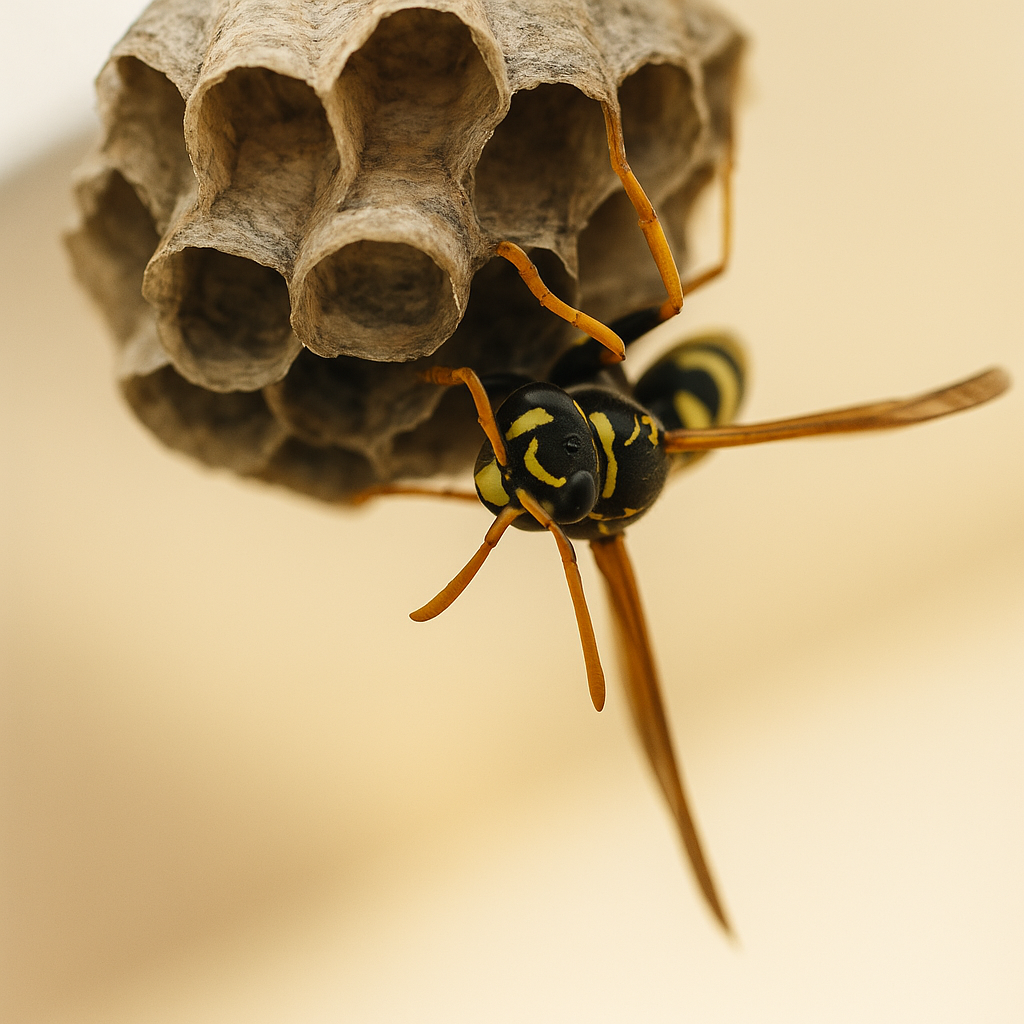
- Visible Nesting – Paper nests under eaves, attached to trim, or within protected overhangs and fixtures.
- High Traffic – Repeated flight paths to and from a single area, especially near a wall opening or soffit line.
- Ground Activity – Frequent entry/exit at a small ground opening can indicate yellowjackets nesting below grade.
- Defensive Behavior – Aggressive or persistent hovering near doors, patios, or seating areas.
- Indoor Sightings – Stinging insects appearing indoors can indicate a nearby void-adjacent nest or entry point.
Safety note: Do not attempt to spray, knock down, or seal an active nest. Disturbance can increase defensive behavior and may force insects into adjacent areas. Keep children and pets away from the activity zone until the issue is resolved.
Stinging Insect Control
Service & Safety Explained
NYC & Long Island
FREQUENTLY ASKED QUESTIONS
What stinging insects do you treat?
Our stinging insect control service is focused on wasps, hornets, and yellowjackets, including nests on exterior structures, under eaves, around decks and railings, within shrubs, and, when applicable, ground-nesting yellowjackets. Service recommendations are based on the insect type, nesting location, accessibility, and safety considerations at the property.
Do you treat honeybees?
No. Honeybees are beneficial pollinators and are not treated under this service category. If honeybee activity is identified, the preferred approach is live removal through a beekeeper or appropriate specialist when available. If identification is uncertain, we will advise on next steps after review and will not proceed with any action that could impact honeybees.
How do you determine where the nest is located?
We start by evaluating the activity zone and observing flight paths to identify likely nesting areas. Nests are commonly found under eaves, within soffit lines, in protected trim details, around exterior fixtures, within dense landscaping, and near structural void-adjacent openings. In some cases, activity may originate from an enclosed cavity, which can affect access and service approach.
Is it safe to remove a nest myself?
We do not recommend self-removal. Disturbing an active nest can trigger defensive behavior and increase the risk of stings, especially near doors, patios, seating areas, and high-traffic zones. Avoid spraying over-the-counter products into openings and do not attempt to seal an active entrance. Keep children and pets away from the activity area until it is addressed.
What affects the cost of stinging insect control?
Pricing depends on the insect type, nest location, severity of activity, property layout, and access requirements. Higher nests, concealed locations, or multiple activity points can increase scope. An on-site assessment helps confirm conditions and determine the safest, most effective approach for control.
Will the insects be gone immediately after service?
Activity often decreases quickly, but timing can vary depending on species behavior, nest placement, weather conditions, and whether additional nests are present. In some situations, a follow-up recommendation may be appropriate to confirm resolution or address additional activity discovered after the initial service.
What should I do before you arrive?
Do not disturb the nest or activity area. Keep windows and doors closed near the activity zone, and keep children and pets indoors or away from the affected area. If possible, note where you are seeing the most activity and avoid using sprays or other products prior to service, as this can increase defensive behavior and complicate assessment.
Licensed • Insured • Stinging Insect Control
Professional wasp, hornet, and yellowjacket control services serving New York City and Long Island.